ON THIS PAGE
Choosing an STI test doesn't mean testing for every infection there is. The tests that make sense for you depend on your sexual history, the type of exposure, whether you have symptoms, and how long ago it happened. Many STIs cause no symptoms at all, so feeling well isn't a reason to skip testing; but not everyone needs every test either. This STD checklist walks through the main tests, which sample each one needs, when each becomes reliable, and how to build a panel that fits you. If you're in Bangkok, Ovio can do your STI testing at home or in your hotel.
STI Testing Checklist: Which Infections Should You Consider?
STI (sexually transmitted infection) and STD (sexually transmitted disease) mean the same thing in everyday use. Doctors increasingly say STI, because you can carry and pass on an infection without it ever causing disease or symptoms.
Use the table as a starting point. The window period is how long after exposure a test can reliably pick up an infection; testing earlier can give a false negative. For every infection in detail, see our STI window periods guide.
| Infection | Main test | Sample | When to test after exposure |
|---|---|---|---|
| Chlamydia (bacteria) | NAAT / PCR, the most accurate test | First-catch urine, or a vaginal, rectal or throat swab | From 2 weeks |
| Gonorrhoea (bacteria) | NAAT / PCR; a culture when antibiotic resistance matters | First-catch urine, or a vaginal, rectal or throat swab | From 2 weeks |
| Syphilis (bacteria) | Blood tests: RPR/VDRL and TPHA/TPPA | Blood; a swab of a sore if there is one | Can show from about 3–6 weeks; reliable by 12 weeks |
| HIV (virus) | 4th generation antigen/antibody; RNA (NAT) for early testing | Blood | Lab Ag/Ab: 18–45 days. RNA: 10–33 days. Finger-stick rapid tests: up to 90 days |
| Hepatitis B (virus) | HBsAg, with other markers if needed | Blood | Usually 1–12 weeks |
| Hepatitis C (virus) | Antibody (anti-HCV), confirmed by an RNA test | Blood | Antibody: 8–11 weeks. RNA: 1–2 weeks |
| Herpes (HSV-1, HSV-2) | PCR swab of a sore; type-specific IgG blood test in some cases | Swab of an active sore, or blood | Swab while the sore is fresh. Blood tests can take up to 12–16 weeks |
| Trichomoniasis (parasite) | NAAT / PCR | Vaginal swab or urine | Test if you have symptoms or a partner has it |
| Mycoplasma genitalium (bacteria) | NAAT / PCR | Urine or genital swab | Not a routine screen; for symptoms that don't clear |
| HPV (high-risk types) | HPV DNA test, sometimes with a Pap test | Cervical sample | Not a post-exposure test: part of cervical screening |
Choose STI Tests Based on the Type of Sex You've Had
Where you test matters as much as what you test for. Chlamydia and gonorrhoea infect the place they were passed to, so an infection in the throat or rectum won't show up in a urine test or a blood test. Matching samples to exposure removes the most common blind spot in STI screening.
- Vaginal or penile sex: a urine sample (men) or vaginal swab (women) for chlamydia and gonorrhoea, plus blood tests for HIV and syphilis.
- Receptive anal sex: a rectal swab for chlamydia and gonorrhoea. Rectal infections usually cause no symptoms, and a urine test misses them.
- Giving oral sex: a throat swab, mainly for gonorrhoea. See STIs from oral sex for the risks of each kind of oral sex.
- More than one type of sex: a swab or sample from each site that was exposed, not just one.
- Shared needles or other blood exposure: blood tests for HIV, hepatitis B and hepatitis C.
If you're not sure which applies, tell the doctor what happened. It's a routine conversation, and it's the only way to be sure the right sites are tested. Our guide to STI blood tests vs urine tests vs swabs explains what each sample can and can't find.
How to Build Your STI Test Panel
- Pick the infections: start from your exposure and symptoms, using the table above.
- Match the samples to the sites: blood, urine and any throat, rectal or vaginal swabs your exposure calls for.
- Single tests or a panel: single tests suit a specific worry, such as a partner's positive chlamydia result. A panel suits a routine check or a new partner.
- Share the timeline: the date of the exposure decides whether a test now is reliable, or whether you'll need a repeat test later.
- Agree who gets the results: results can come to you directly, and you can share them with your own doctor.
Prices. The cost depends on how many infections and sites are tested. At Ovio, single tests start at ฿890 (syphilis screening), and the Ovio Essential package (฿5,990) covers blood tests for HIV, syphilis and hepatitis B and C plus an 18-infection PCR panel. See all STI test prices and packages.
Your Pre-Test STD Checklist
Before you book, run through this STD checklist:
Note the type of exposure: vaginal, anal, oral or blood. This decides which sites to sample.
Note the date: the date of your last possible exposure, so the tests line up with their window periods.
Note any symptoms: discharge, pain when passing urine, a sore throat, sores, rashes or bleeding.
Choose the tests: the infections and the sample sites that match your exposure.
Prepare for urine tests: avoid passing urine for at least an hour before the sample.
Ask about results: how they'll reach you, and who will explain a positive or unclear result.
Plan a retest if needed: if you test inside a window period, book a follow-up test for when the window has passed.
Not sure when the window closes for your exposure date? The STI test window calculator gives the dates for each test.
Getting STI Tests in Bangkok
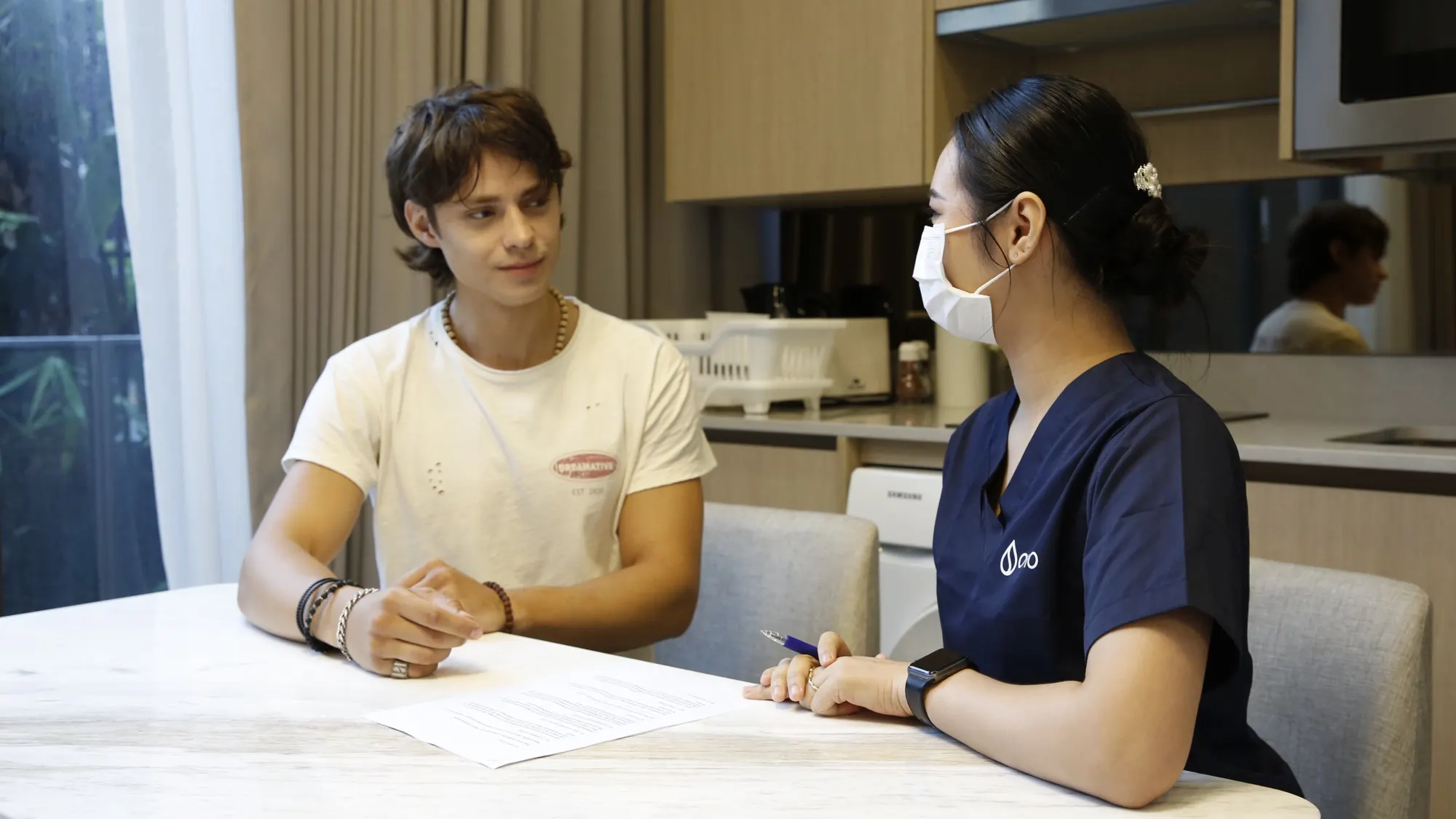
Regular testing is part of looking after your health, whether you live in Bangkok or are visiting. Ovio's doctors come to your home, condo, hotel or office anywhere in Bangkok and take the samples there: blood, urine and swabs. Tell us what happened and when, and we'll help you choose the tests that fit, whether that's one test or a full panel. Read how at-home STI testing works.
Private STI testing in Bangkok
Ovio can arrange private STI testing at a location that works for you.
Frequently Asked Questions
What STI tests should I get after unprotected sex?
Usually chlamydia and gonorrhoea (urine or swab, from 2 weeks after), HIV and syphilis (blood), and hepatitis B and C if you're not vaccinated or there was blood exposure. Add throat or rectal swabs if you had oral or anal sex.
Does a full STD panel test for everything?
No single test or package covers every infection at every site. Check which infections and which samples a panel includes, rather than going by its name.
Can a blood test detect chlamydia or gonorrhoea?
No. Chlamydia and gonorrhoea are found with a PCR test on urine or a swab from the exposed site. Blood tests are for HIV, syphilis and hepatitis.
How often should I get an STI test?
At least once a year if you're sexually active with new or several partners, and with each new partner. People at higher risk, including men who have sex with men with several partners, may test every 3 to 6 months.
I tested too early. What now?
A negative result inside the window period isn't final. Repeat the test once the window has passed; your doctor will tell you which tests to repeat and when.
Sources
- Getting Tested for STIs (opens in a new tab)
- Getting Tested for HIV (opens in a new tab)
- Sexually Transmitted Infections Treatment Guidelines: Screening Recommendations (opens in a new tab)
- Sexually Transmitted Infections Treatment Guidelines: Genital Herpes (opens in a new tab)
- STI screening timetable (opens in a new tab)
ABOUT THIS GUIDE
This guide gives general information and is not personal medical advice.
- Written by
- Kewalee Rujikajorn
- Published