ON THIS PAGE
Genital herpes is caused by the herpes simplex virus, HSV-1 or HSV-2. Once you have it, the virus stays in the body for life, even after an outbreak has healed, although outbreaks usually become milder and less frequent. There are two main ways to test for it: a swab of a sore, and a blood test. They work very differently, and choosing the wrong one at the wrong time is the most common reason people get a confusing result. Ovio's herpes test offers both, at home in Bangkok.
Herpes Swab vs Blood Test: The Differences
| Herpes swab test | Herpes blood test | |
|---|---|---|
| How it's done | A swab is rubbed on a blister or sore to collect fluid and cells, and sent for PCR (NAAT) testing | A blood sample is tested for type-specific IgG antibodies to HSV-1 and HSV-2 |
| What it detects | The virus itself (HSV-1 or HSV-2) | Antibodies the body has made against the virus |
| When to use it | When there's a blister, sore or ulcer | Without a sore, in specific situations a doctor agrees on |
| Accuracy | Very high, if the sore is swabbed early | Good, but can be negative for up to 12 weeks after infection; low positives can be false |
| What it tells you | This sore is herpes, and which type | You've had HSV-1 or HSV-2 at some point, but not where or when |
| Watch out for | A sore that's already healing may test negative | A positive HSV-1 result is common and may be from cold sores |
Herpes Swab vs Blood Test: Which Should You Choose?
The two tests answer different questions. If you have a sore, especially after sex that may have put you at risk, a swab is the right test: it confirms whether that sore is herpes and which type it is, which helps predict how often it may come back.
If you don't have symptoms, a blood test is sometimes useful, for example if a partner has genital herpes and you want to know your own status, or you've had recurring sores that were never tested. If you're testing after a recent exposure, wait 12 to 16 weeks so the antibodies have time to appear. If the result is unclear, or a sore appears in the meantime, a swab of the sore gives a clearer answer.
Can a Urine Test Detect Herpes?
Not reliably, and it isn't a recommended herpes test. Herpes lives in the skin and nerves, not in urine, so a urine sample can easily miss it, and a negative result doesn't rule it out. Burning when you pass urine, discharge or needing to go more often are more often caused by chlamydia, gonorrhoea or a urine infection, which urine tests do find. If you have those symptoms along with sores, the sores should be swabbed. See STI blood tests vs urine tests vs swabs for what each sample detects.
When Should You Get a Herpes Swab or Blood Test?
1. When you have a sore or blisters: a swab
A first outbreak often starts with itching, tingling or burning, followed by small fluid-filled blisters, sometimes in clusters with a red edge. They break into shallow, painful sores that scab over and heal by themselves. A first outbreak can also come with fever, aches and swollen glands.
If you notice anything like this, have a swab test as soon as possible, ideally within the first 48 hours and certainly before the sore crusts over. The doctor takes fluid and cells from the sore, and the lab runs a PCR test, which is very reliable when the sample is taken early. A sore can also be syphilis, so a syphilis blood test is usually added.
2. When you don't have symptoms: sometimes a blood test
If a partner has herpes, or you're worried about a past exposure, a type-specific IgG blood test can show whether you have antibodies to HSV-1, HSV-2 or both. Test 12 to 16 weeks after the sex you're worried about: before then, the result may be negative simply because the antibodies haven't appeared yet.
Some labs also offer an IgM test. The CDC advises against it: IgM doesn't reliably show a recent infection, because it can also be positive during a recurrence of an old infection, and it gives false positives. A positive HSV-1 IgG result is common in adults and often reflects cold sores rather than genital herpes.
Private Herpes Testing in Bangkok
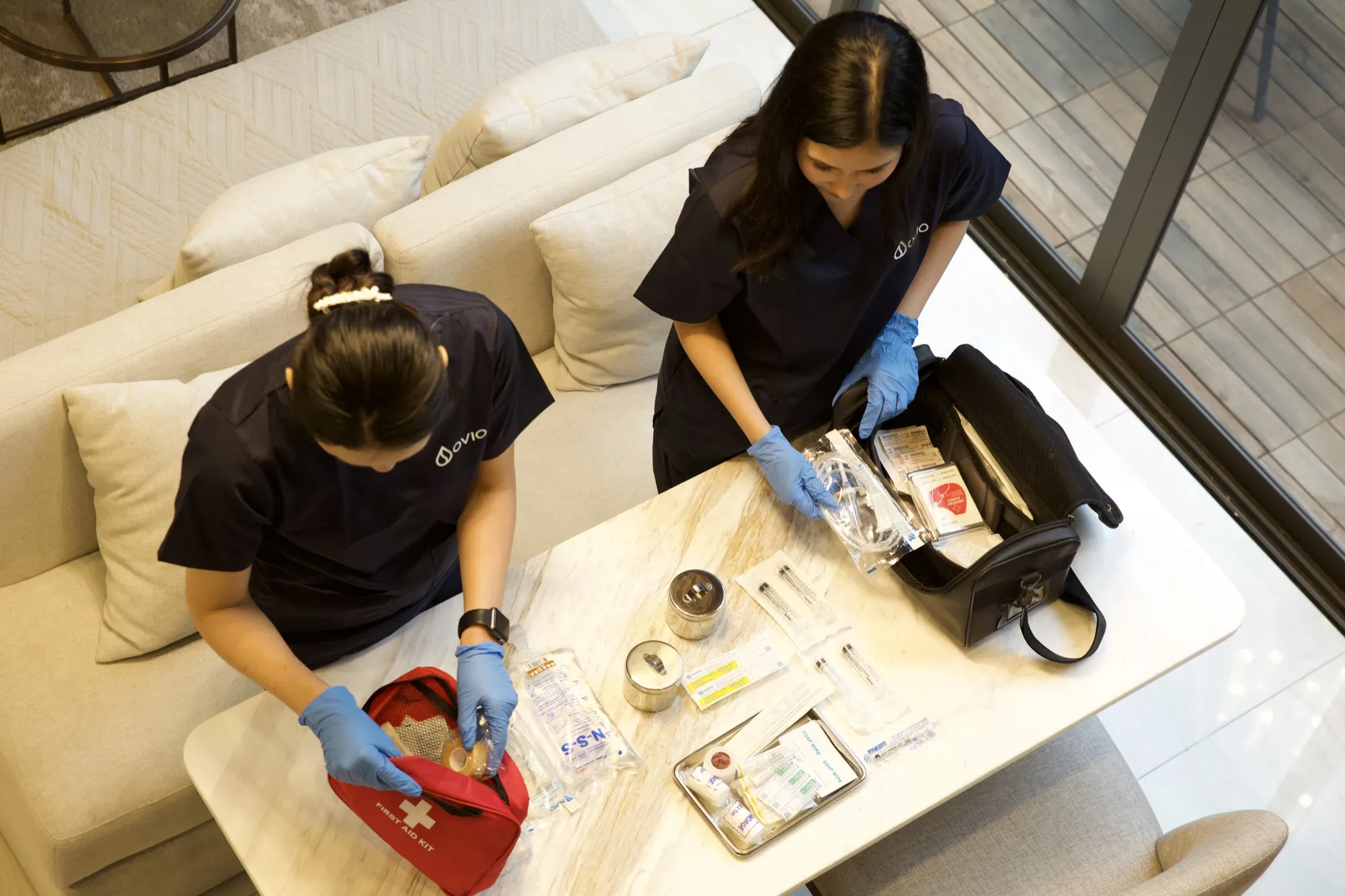
It's normal to feel anxious or embarrassed about a possible herpes sore, and that's often why people wait until it has healed, when a swab is far less useful. With Ovio's at-home STI testing, a doctor comes to your home, condo, hotel or office anywhere in Bangkok at a time you choose, so the sore can be swabbed while it's fresh. The service is for Thai and international clients.
The herpes lesion-swab PCR (HSV-1 and HSV-2) is ฿3,990, and the HSV-1 and HSV-2 type-specific IgG blood test is ฿3,490. Herpes is common and manageable: antiviral tablets shorten outbreaks, can prevent them, and lower the chance of passing it on. If herpes is confirmed, an HIV test at the same time is sensible. Not sure what else to test for? See which STI tests should I get?
Private STI testing in Bangkok
Ovio can arrange private STI testing at a location that works for you.
Frequently Asked Questions
What is the most accurate test for herpes?
A PCR swab of an active blister or sore, taken in the first few days. It confirms herpes and tells you whether it's HSV-1 or HSV-2.
Can a herpes blood test tell if it's genital or oral herpes?
No. It shows which type you've had, HSV-1 or HSV-2, but not where on the body. HSV-2 is usually genital; HSV-1 can be oral or genital.
How long after exposure should I wait for a herpes blood test?
12 to 16 weeks. Antibodies can take up to 12 weeks to appear, so an earlier negative result may be wrong.
My sore has healed. Is it too late to test?
For a swab, usually yes: a healed or crusted sore often tests negative. If it comes back, have it swabbed in the first day or two. A blood test is an option in the meantime, with the limits above.
Is herpes included in a standard STI test?
Usually not, because routine herpes blood tests aren't recommended without symptoms. Ask for a herpes test if you have a sore, or if a partner has herpes.
Sources
ABOUT THIS GUIDE
This guide gives general information and is not personal medical advice.
- Written by
- Kewalee Rujikajorn
- Published