
ON THIS PAGE
HSV-1 can live in your body for years without you ever knowing. It's one of the most common infections in the world, yet it's widely misunderstood: many people think of it only as cold sores, and many don't realise it can cause genital herpes. This guide explains what herpes simplex virus type 1 (HSV-1) is, how it spreads, how it differs from HSV-2, and how it's tested and treated. Ovio's herpes test is done at home in Bangkok.
What Is Herpes Simplex Virus Type 1 (HSV-1)?
HSV-1 is a virus in the herpes family. It gets in through moist skin, such as the lips, mouth or genitals, or through tiny breaks in the skin. It multiplies in the skin cells there, and the inflammation this causes produces the typical small, fluid-filled blisters. The virus then travels along a nerve and settles quietly in a nerve cluster, where the immune system can't remove it. From time to time it can travel back to the skin, causing another outbreak or being shed without any symptoms.
That's why HSV-1 is lifelong. For most people it's a mild, occasional skin problem, not a threat to their general health.
How Common Is HSV-1?
Very. The World Health Organization estimates that about 3.8 billion people under 50, or 64%, have HSV-1. Most catch it in childhood, from a kiss or close contact with family. Where fewer children catch it, more people meet it for the first time as teenagers or adults, often through oral sex, which is one reason genital HSV-1 has become more common. In Thailand, as elsewhere in Asia, most adults have been exposed by adulthood.
How Is HSV-1 Transmitted?
- Kissing and mouth contact: the most common route. Saliva and the skin around the mouth carry the virus, even when there's no cold sore.
- Oral sex: HSV-1 passes easily from the mouth of someone with oral herpes to a partner's genitals, causing genital HSV-1. Less often, it can pass from the genitals to the mouth.
- Skin-to-skin contact with a sore or with skin that is shedding the virus.
- Shedding without symptoms: the virus can be released from normal-looking skin on days with no sores. Most people catch HSV-1 this way, from someone who doesn't know they have it.
Sharing lip balm, cups, cutlery or towels with someone who has an active cold sore can occasionally pass it on, but this is much less common than direct contact, because the virus doesn't survive long outside the body. You won't catch it from toilet seats or swimming pools.
Oral HSV-1 vs Genital HSV-1
Oral herpes appears around the lips and mouth as cold sores, sometimes called fever blisters. A child's first infection can cause painful, swollen gums and mouth ulcers with a fever.
Genital herpes caused by HSV-1 looks the same as genital herpes caused by HSV-2: blisters and shallow sores on or around the genitals or anus. The difference is what happens afterwards. Genital HSV-1 tends to come back less often, and the skin sheds the virus less often over time, than genital HSV-2.
Knowing the site matters for testing and advice. A swab is taken from wherever the sore is, and the type and site together help a doctor predict how often it may recur and whether daily treatment is worth it.
HSV-1 vs HSV-2: What's the Difference?
| HSV-1 | HSV-2 | |
|---|---|---|
| Usual site | Mouth and lips (cold sores); increasingly the genitals | Genitals and anus; rarely the mouth |
| How it's usually caught | Kissing and close contact, often in childhood; oral sex | Sex: vaginal, anal or oral, or genital skin contact |
| Genital recurrences | Usually fewer | Usually more frequent |
| Link with HIV | No clear link | Raises the risk of getting HIV |
Both types can infect either site, and you can have both. For the virus that causes most recurrent genital herpes, see what is HSV-2?
HSV-1 Symptoms: What Does It Look Like?
Many people with HSV-1 never notice symptoms. When they do appear, a typical cold sore goes through these stages:
Tingling, itching or burning on the lip, often a day or two before anything shows.
A cluster of small blisters on a red, swollen patch.
Open sores when the blisters break, which can weep clear fluid.
Crusting and healing, usually within one to two weeks, without a scar.
A first infection can also cause a fever, a sore throat, swollen glands in the neck and a painful mouth that makes eating and drinking hard. Recurrences are usually milder and shorter, often in the same spot, and rarely cause a fever.
Genital HSV-1 causes painful blisters or sores on the vulva, vagina, penis or around the anus, often with pain when passing urine and swollen glands in the groin. A first genital outbreak can feel like flu.
When Can HSV-1 Become Serious?
Most HSV-1 infections stay mild. Rarely, it causes problems that need urgent care:
- Herpes in the eye (herpes keratitis): usually spread from a cold sore by the fingers. It causes a painful red eye, blurred vision and sensitivity to light. See a doctor or eye specialist the same day: untreated, it can scar the cornea and affect your sight.
- Herpes encephalitis: a rare infection of the brain. HSV-1 is the most common cause of sporadic viral encephalitis. Sudden high fever, a severe headache, confusion or a seizure need emergency care.
- Severe infection with a weakened immune system: in people having chemotherapy or with advanced HIV, sores can be larger, last longer and occasionally spread.
HSV-1 in Pregnancy
Herpes in a newborn (neonatal herpes) is rare but serious. The highest risk is when a mother catches genital herpes, HSV-1 or HSV-2, for the first time late in pregnancy, before her body has made antibodies to pass to the baby. Someone who has had herpes for a long time passes on antibodies that protect the baby, so the risk is much lower.
If you or a partner have herpes and you're pregnant, tell your doctor or midwife. People with genital herpes are often offered antiviral tablets in the last weeks of pregnancy, and a caesarean is advised only if there are sores or warning symptoms when labour starts. In late pregnancy, avoid oral sex with a partner who has a cold sore.
HSV-1 Incubation, Window Period and Testing
If a first infection causes symptoms, they usually appear 2 to 12 days after contact, about 4 days on average. Many first infections cause nothing noticeable at all.
- If you have a sore: a PCR swab of the sore is the most reliable test and shows whether it's HSV-1 or HSV-2. Have it in the first few days, before the sore crusts over. Viral culture, an older test, misses more as sores start to heal.
- If you don't have a sore: a type-specific IgG blood test shows whether you've had HSV-1 at some point. It can't say whether that's oral or genital, and some HSV-1 antibody tests miss infections. Antibodies can take up to 12 weeks to appear, so test 12 to 16 weeks after the contact you're worried about.
Routine herpes blood tests aren't recommended for people without symptoms. A positive HSV-1 result is very common and often reflects cold sores, so it rarely changes what you should do. A negative swab from a healing sore, or a negative blood test taken too early, doesn't rule herpes out. For a detailed comparison, see herpes swab vs blood test.
Can HSV-1 Be Cured?
Not yet. No medicine can remove the virus from the nerve cells where it rests. Treatment controls it well, though:
- Antiviral tablets: aciclovir, valaciclovir and famciclovir stop the virus multiplying, so sores heal faster and hurt less. They work best started early.
- Treating each outbreak: a short course started at the first tingle shortens or sometimes stops an outbreak.
- Daily (suppressive) treatment: for people with frequent outbreaks, a daily low dose prevents most of them.
- Self-care: keep sores clean and dry, use simple painkillers if needed, and drink plenty if mouth sores make eating painful.
How to Lower the Risk of Passing On HSV-1
- Avoid kissing and oral sex while you have a cold sore or feel the tingle that comes before one.
- Use condoms or dental dams for oral and penetrative sex. They lower the risk, but don't cover all the skin that can shed the virus.
- Wash your hands after touching a sore or applying cream, and don't touch your eyes.
- Don't share lip balm, cups, cutlery or towels during an outbreak.
- Talk to partners about herpes: because it often spreads without symptoms, openness helps you both decide how to manage the risk.
Daily antivirals are proven to cut the chance of passing on genital HSV-2. The evidence for HSV-1 is more limited, but a doctor may suggest them for someone with frequent genital HSV-1 outbreaks.
Herpes Testing in Bangkok
If you have a cold sore you recognise, you usually don't need a test. If you have a sore on or near the genitals, or you're unsure what a sore is, see a doctor while it's fresh: a sore can also be syphilis, which is why a syphilis blood test is often added.
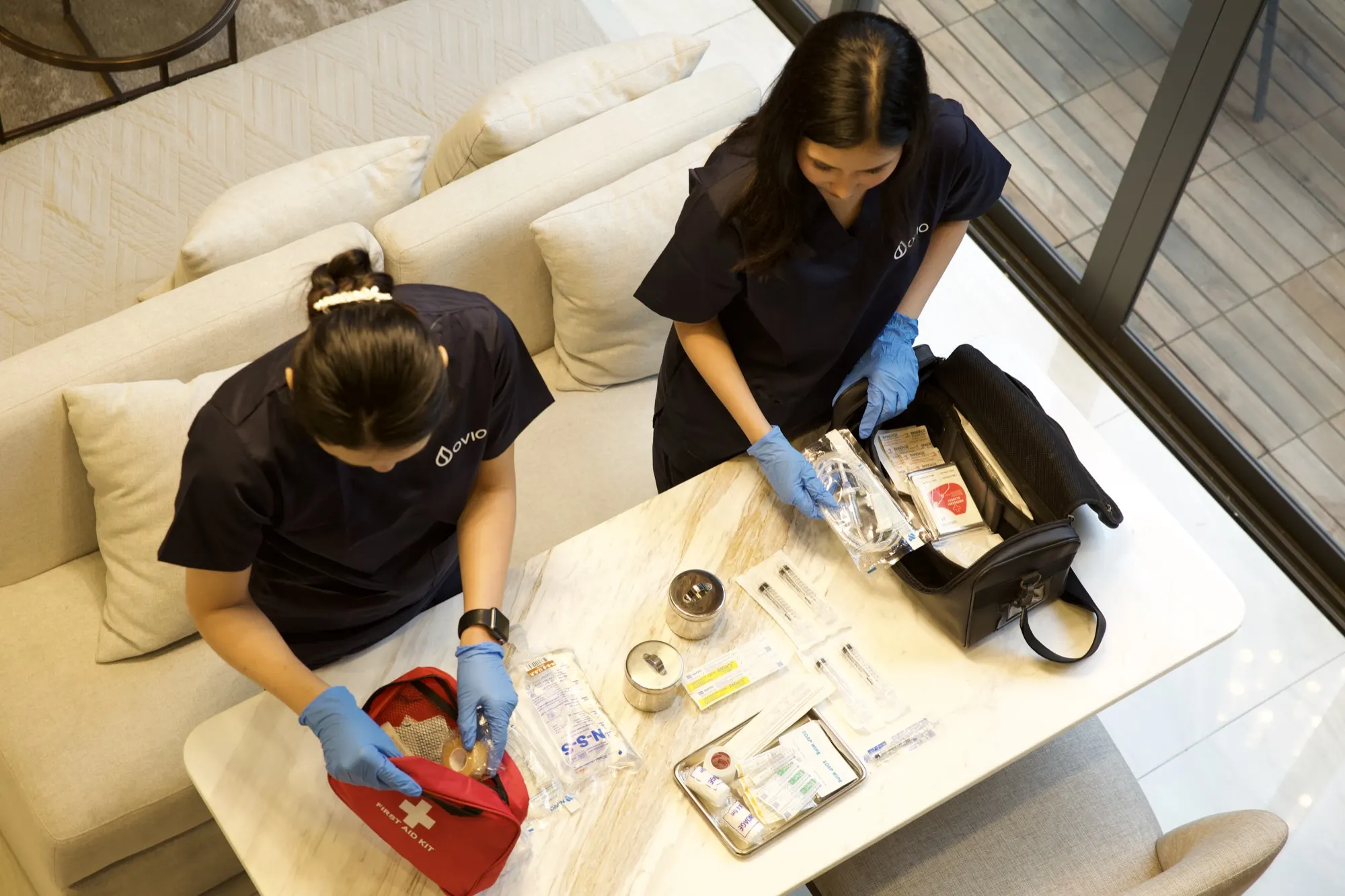
With Ovio's at-home STI testing, a doctor visits your home, condo, hotel or office anywhere in Bangkok at a time you choose, for Thai and international clients, so the sore can be swabbed before it heals. The herpes lesion-swab PCR (HSV-1 and HSV-2) is ฿3,990, and the HSV-1 and HSV-2 type-specific IgG blood test is ฿3,490. Not sure what else to test for? See which STI tests should I get?
Private STI testing in Bangkok
Ovio can arrange private STI testing at a location that works for you.
Frequently Asked Questions
Is HSV-1 an STI?
It can be. Most people catch HSV-1 non-sexually, often as children, but it can also pass through oral sex and genital contact, and it's now a common cause of genital herpes.
Can I get genital herpes from someone with a cold sore?
Yes. Oral sex from someone with a cold sore, or who is shedding the virus without one, can pass HSV-1 to the genitals. Avoid oral sex when there's a cold sore or tingling.
Is genital HSV-1 better than genital HSV-2?
In one way: genital HSV-1 usually recurs less often and sheds less over time. The first outbreak can be just as painful, and both are treated with the same antiviral tablets.
My HSV-1 blood test is positive. Do I have genital herpes?
Not necessarily. Most adults have HSV-1 antibodies, usually from oral infection, and the blood test can't tell where the virus is. If you've never had genital sores, it most likely reflects oral HSV-1.
Can HSV-1 spread when there are no sores?
Yes. The skin can shed the virus on days without symptoms, which is how most people catch it. The risk is highest during an outbreak, so avoiding contact then helps most.
Sources
ABOUT THIS GUIDE
This guide gives general information and is not personal medical advice.
- Written by
- Kewalee Rujikajorn
- Published