
ON THIS PAGE
Sex is a normal part of life, and so are STIs. Millions of people catch one every year. But if your partner has tested positive and you've had sex without a condom, you may be infected too, and it's natural to wonder whether you've caught it and what happens next. Here are the steps to take, and when to have an STI test for each infection.
If Your Partner Tested Positive for an STI, Are You at Risk?
Probably, if you've had sex without a condom or other barrier since your partner caught it. That includes oral sex as well as vaginal and anal sex. How likely you are to have caught it depends on the infection, how long your partner has had it and what kind of sex you've had, but for chlamydia and gonorrhoea the chance is high enough that doctors usually treat partners without waiting for a test.
Not having symptoms doesn't mean you haven't caught it. Most of these infections are often silent; see STIs without symptoms.
What Should I Do Next If My Partner Tested Positive?
If the infection is HIV and the sex was in the last 72 hours
1. Stay calm and find out the details
Try not to panic, and try not to jump to conclusions about blame. STIs are often silent for months or years, so it may not be clear who had it first. What helps most is knowing the details: which infection it is, when your partner was diagnosed, and whether they've been treated. If they can show you the test result, so much the better, as it tells your doctor exactly what to test for and how to treat you.
2. Get tested, and treated if needed
This is the most important step: it confirms whether you've been infected, so you know what to do next. When to test, and which test, depends on the infection:
| Partner's infection | When to test | Test | Sample |
|---|---|---|---|
| Chlamydia | Now if you have symptoms; otherwise 2 weeks after the last sex. Often treated straight away | PCR (NAAT) | First-catch urine, plus throat or rectal swabs if relevant |
| Gonorrhoea | Now if you have symptoms; otherwise 2 weeks after the last sex. Often treated straight away | PCR (NAAT) | First-catch urine, plus throat or rectal swabs if relevant |
| Syphilis | Now, with a final test 12 weeks after the last sex. Often treated straight away | Syphilis blood tests (such as RPR/VDRL and TPHA) | Blood, or a swab if you have a sore |
| HIV | PEP first if within 72 hours. Then a 4th generation test from 18–45 days, or an RNA test from 10–33 days | 4th generation antigen/antibody test, or HIV RNA (PCR) | Blood |
| Herpes | When you have a sore or blister, while it's fresh | PCR swab of the sore | Swab of the sore |
| Hepatitis B | Now, and again if negative; it can take 1–12 weeks to show. Ask about the vaccine straight away if you're not protected | HBsAg, and antibodies to check immunity | Blood |
| HPV | No test for partners. Women continue cervical screening; anyone can be checked for warts | Cervical HPV screening (women) | Cervical or vaginal swab |
A few more things to know:
- A negative test taken early may need repeating. Each test has a window period before it can find an infection, and your doctor will give you a date for any repeat. For HIV, our guide to the 4th generation HIV test explains the timing.
- Treatment often comes first for bacterial STIs. CDC guidelines advise treating sexual partners of people with chlamydia, gonorrhoea or early syphilis without waiting for test results, because a test taken too soon can miss the infection.
- There's no routine HPV test for men, and no test that tells you whether you caught HPV from a partner. HPV is very common and usually clears by itself. Women should keep up with cervical screening, and anyone who notices warts should see a doctor.
- Herpes blood tests aren't usually recommended without symptoms, because they can give misleading results. A swab of a sore is the reliable test.
3. Follow your treatment plan
If you test positive, your doctor will explain the treatment. Chlamydia, gonorrhoea and syphilis are cured with antibiotics; chlamydia vs gonorrhoea explains how their treatment differs. Herpes and HIV can't be cured, but treatment controls them very well. Take the full course, even if you feel better, and never use leftover or borrowed antibiotics.
4. Look after your health
Take your medicine as prescribed, go to your follow-up appointments, and look after yourself generally: eat well, rest and avoid heavy drinking during treatment. If the diagnosis is affecting your mood or your relationship, it's worth talking it through with your doctor.
5. Avoid sex until treatment is finished
Avoid sex, including oral sex, until you and your partner have both finished treatment. For chlamydia and gonorrhoea that means 7 days after you've both been treated, and until any symptoms have gone. Otherwise you can pass the infection straight back and forth. For HIV, treatment that keeps the viral load undetectable means it can't be passed on through sex. For herpes, avoid sex during outbreaks. After that, keep using condoms, especially with new partners.
6. Retest and keep up regular check-ups
Reinfection is common, so guidelines advise retesting about 3 months after treatment for chlamydia and gonorrhoea. After syphilis, follow-up blood tests check that the treatment worked. After that, regular STI check-ups help catch any new infection early.
How to Reduce the Risk of Getting an STI From Your Partner
- Both test before you stop using condoms, and again with any new partner.
- Talk openly about sexual health and anything that might have put either of you at risk.
- If either of you is unsure, that person should have a full STI test.
- Use condoms, or dental dams for oral sex, every time until you both have clear results. Oral sex carries risks too: see STIs from oral sex.
- Get vaccinated against HPV and hepatitis B if you aren't already.
- If you notice symptoms after sex without a condom, get tested at the right time.
- If you're diagnosed with an STI, tell your recent partners so they can be tested and treated too.
If You're at Risk, Get Tested for STIs in Bangkok
Whatever the reason you might be at risk, and especially if a partner has tested positive, testing at the right time after sex is the clearest way to know your status and to stop the infection spreading. Public and private hospitals and clinics across Bangkok offer STI tests.
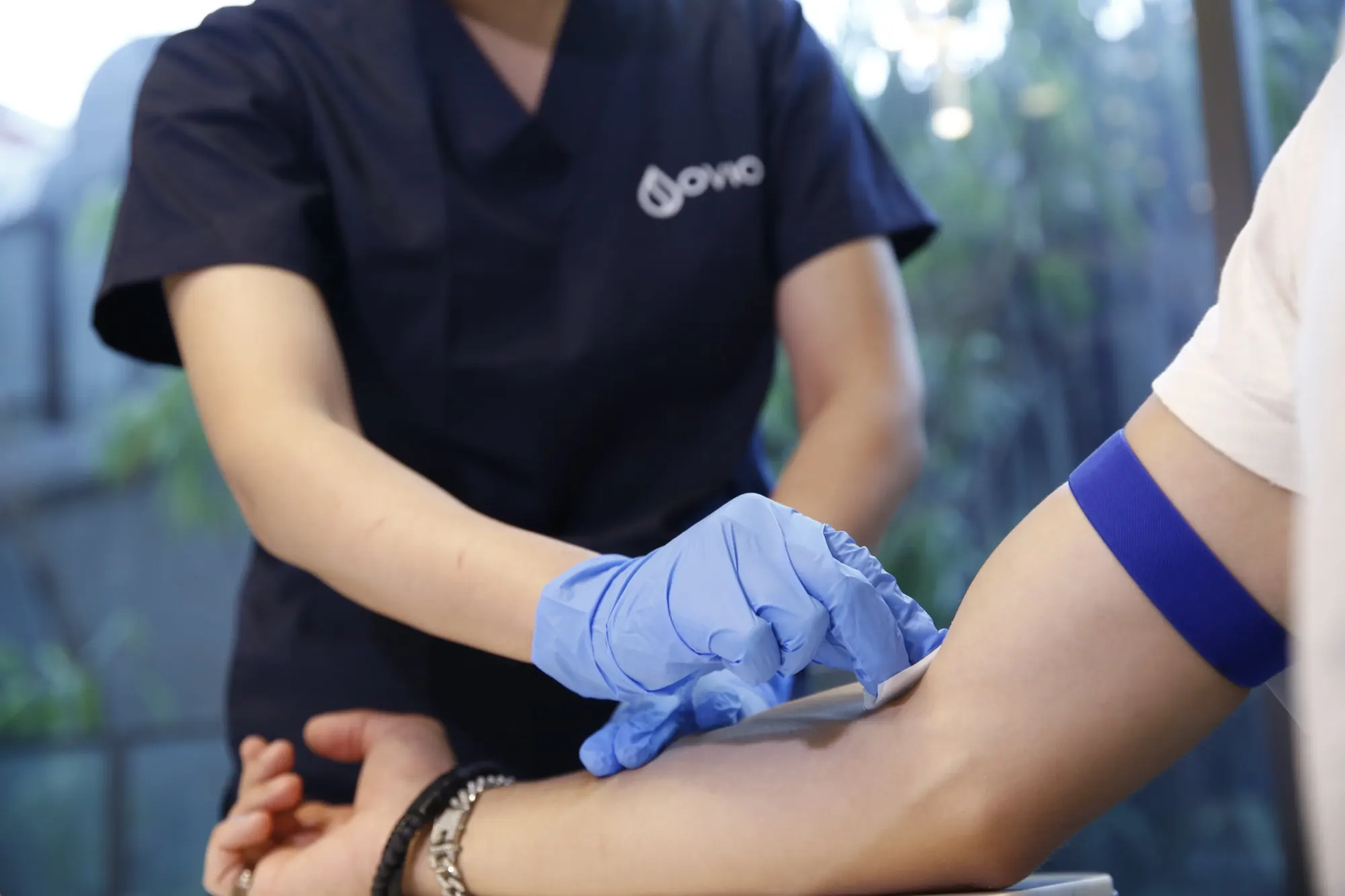
If you'd prefer privacy and convenience, Ovio's at-home STI testing comes to your home, condo, hotel or office anywhere in Bangkok, for Thai and international clients. Tell us your partner's diagnosis and when you last had sex, and we'll suggest the right tests and timing. A doctor takes the samples, results are reliable, and everything stays strictly confidential.
Private STI testing in Bangkok
Ovio can arrange private STI testing at a location that works for you.
Frequently Asked Questions
My partner has chlamydia but I tested negative. Do I need treatment?
Often, yes. If the test was within 2 weeks of the last sex, it may have been too early. Doctors usually treat partners of people with chlamydia anyway, without waiting for a positive result.
Does my partner testing positive mean they cheated?
Not necessarily. Many STIs can stay silent for months or years, so either of you may have had it from a previous relationship without knowing.
Can we have sex if we're both being treated?
Wait until you've both finished treatment, and for chlamydia and gonorrhoea, for 7 days after. Having sex sooner can pass the infection back.
My partner has HIV. Am I definitely infected?
No. If your partner is on treatment with an undetectable viral load, HIV isn't passed on through sex. If they're not, get tested, and ask about PEP right away if the sex was in the last 72 hours.
My partner has HPV. Should I get tested?
There's no test to check whether you've caught HPV from a partner, and most HPV clears by itself. Women should keep up with cervical screening, and anyone with warts should see a doctor.
My partner has herpes. Will I get it?
Not necessarily. Avoiding sex during outbreaks, using condoms and your partner taking daily antiviral tablets all lower the risk a lot. A swab is the test to have if you get a sore.
Sources
- Sexually Transmitted Infections Treatment Guidelines: Chlamydial Infections (opens in a new tab)
- Sexually Transmitted Infections Treatment Guidelines: Gonococcal Infections Among Adolescents and Adults (opens in a new tab)
- Sexually Transmitted Infections Treatment Guidelines: Syphilis (opens in a new tab)
- Sexually Transmitted Infections Treatment Guidelines: Genital Herpes (opens in a new tab)
- Post-Exposure Prophylaxis (PEP) (opens in a new tab)
- Viral Suppression and an Undetectable Viral Load (opens in a new tab)
- Hepatitis B fact sheet (opens in a new tab)
- Human papillomavirus and cancer fact sheet (opens in a new tab)
ABOUT THIS GUIDE
This guide gives general information and is not personal medical advice.
- Written by
- Kewalee Rujikajorn
- Published