ON THIS PAGE
Different STIs live in different parts of the body. Some, such as HIV, syphilis and hepatitis B and C, are found with an STI blood test. Others, such as chlamydia and gonorrhoea, are only found in a urine sample or a swab from the place they infect: the urethra, vagina, cervix, throat or rectum. Knowing what an STD blood test can and can't detect is how you avoid a reassuring result that misses an infection somewhere else.
| Sample | Detects | Doesn't detect |
|---|---|---|
| Blood | HIV, syphilis, hepatitis B, hepatitis C, herpes antibodies | Chlamydia, gonorrhoea, trichomoniasis, Mycoplasma genitalium |
| First-catch urine | Chlamydia, gonorrhoea, trichomoniasis and Mycoplasma genitalium in the urethra | Throat or rectal infections; HIV, syphilis, hepatitis |
| Vaginal swab | Chlamydia, gonorrhoea, trichomoniasis, Mycoplasma genitalium | Throat or rectal infections; blood-borne infections |
| Throat swab | Gonorrhoea and chlamydia in the throat | Genital or rectal infections |
| Rectal swab | Gonorrhoea and chlamydia (including LGV strains) in the rectum | Genital or throat infections |
| Sore (lesion) swab | Herpes (HSV-1, HSV-2); sometimes syphilis | Anything not in the sore |
STI Blood Test: What Does It Detect?
An STI blood test looks for antibodies (your immune response), antigens (parts of the germ) or the germ's genetic material in your blood. Which one depends on the infection, and that decides how soon after exposure the test works.
Infections an STD blood test detects
- HIV: a 4th generation test detects HIV-1/HIV-2 antibodies and the p24 antigen, so it picks up infection earlier than antibody-only tests. An HIV RNA test detects the virus itself, earlier still.
- Syphilis: two types of antibody test: non-treponemal (RPR or VDRL) and treponemal (TPHA or TPPA). A positive result on one is confirmed with the other.
- Hepatitis B: HBsAg (surface antigen) shows a current infection; other markers show past infection or vaccination.
- Hepatitis C: an antibody test (anti-HCV) screens for exposure, and an RNA test shows whether the virus is still there.
- Herpes (HSV-1 and HSV-2): type-specific IgG antibody tests. They can't tell you where the infection is or when you caught it, and the CDC doesn't recommend them for people without symptoms.
How the blood is taken
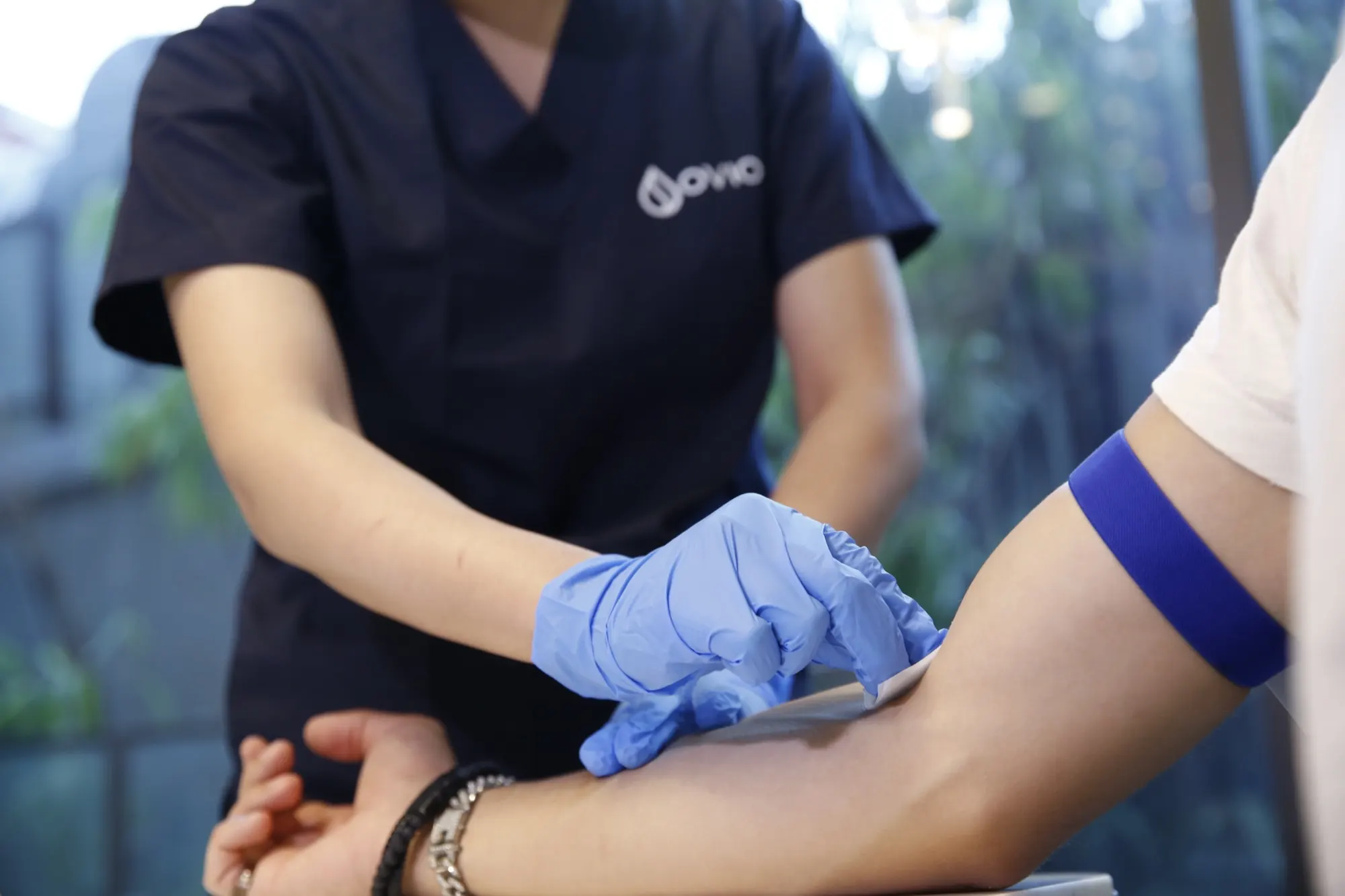
- From a vein: a doctor draws a small sample for laboratory testing. This is the most accurate option and is used for most STI blood tests.
- Finger-prick: a drop of blood for some rapid tests, with results in about 15 to 20 minutes. Rapid HIV tests from a finger-prick have a longer window period than laboratory tests.
Limits of an STI blood test
- The window period: antibodies and antigens take time to appear. A laboratory HIV antigen/antibody test usually detects HIV 18 to 45 days after exposure; syphilis tests are reliable by about 12 weeks. A negative test inside the window may need repeating.
- Past or current infection: some antibodies stay after an infection has been treated or cleared. A treponemal syphilis test stays positive for life, and hepatitis C antibodies stay after cure, so a positive result needs a doctor to interpret it.
- Confirmation: a reactive screening result is confirmed with a second, different test before a diagnosis is made.
For exact timings for every infection, see our STI window periods guide.
STI Urine Test: What Does It Detect?
An STI urine test is the simplest, painless way to test for the common bacterial STIs in the urethra. Unlike a blood test, it doesn't look for antibodies: it uses a nucleic acid amplification test (NAAT, often called PCR) to find the genetic material of the germ itself, which makes it very accurate.
- Chlamydia: detected by NAAT.
- Gonorrhoea: detected by NAAT.
- Trichomoniasis: detected by NAAT on urine, though a vaginal swab is more sensitive for women.
- Mycoplasma genitalium: tested when symptoms don't clear up, not as a routine screen. Routine testing for Mycoplasma hominis and Ureaplasma isn't recommended.
The first-catch sample
For STI urine tests you give a first-catch sample: the first part of the stream, not midstream, because it carries the most bacteria from the urethra. Avoid passing urine for at least an hour before.
Limits of an STI urine test
- It only tests the urethra: a urine test can miss chlamydia or gonorrhoea in the throat or rectum. For women, a vaginal swab is more accurate than urine.
- It doesn't replace a blood test: urine can't detect HIV, syphilis or hepatitis.
STI Swab Test: What Does It Detect?
An STI swab test collects a sample from one specific site with a soft sterile swab. It finds infections exactly where they are, including ones a blood or urine test would miss.
Throat (pharyngeal) swab
Tests for gonorrhoea and chlamydia in the throat. A doctor swabs the back of the throat and the tonsils; it takes seconds. Throat infections rarely cause symptoms, so a swab matters after giving oral sex. See STIs from oral sex.
Rectal swab
Tests for gonorrhoea and chlamydia in the rectum, including the LGV strains of chlamydia. The swab goes just inside the anus, and many people take it themselves. A urine test can't find a rectal infection, so this swab matters after receptive anal sex.
Vaginal and cervical swabs
Test for chlamydia, gonorrhoea and trichomoniasis, and can also check for non-STI conditions such as bacterial vaginosis or thrush. A self-taken vaginal swab works well for many tests and is the most accurate sample for chlamydia in women.
Sore (lesion) swab
Tests the fluid from a blister, sore or ulcer, mainly for herpes. A PCR swab works best from a fresh sore, within the first few days; as it heals, the test becomes less likely to find the virus. A sore can also be syphilis, so a blood test is usually added.
Limits of a swab test
- One site at a time: a negative throat swab says nothing about the rectum or genitals.
- Timing for sores: herpes swabs are less accurate once a sore has started to heal, so get it checked early.
- It doesn't replace a blood test: swabs don't screen for HIV, syphilis or hepatitis.
Why Site-Specific STI Testing Matters
Gonorrhoea and chlamydia infect the tissue they were passed to. US CDC guidelines advise choosing test sites by the type of sex someone has had, because testing only urine misses many throat and rectal infections, especially in men who have sex with men. Some common situations:
- Oral sex: gonorrhoea can infect the throat. A negative urine test doesn't rule it out; a throat swab does.
- Receptive anal sex: gonorrhoea and chlamydia can infect the rectum, usually without symptoms. A rectal swab is needed.
- A false sense of security: a negative urine test only covers the urethra. If other sites were exposed, they need their own swabs, and HIV and syphilis need a blood test.
- No symptoms: most of these infections are silent. Testing is based on what happened, not on how you feel. See STIs without symptoms.
To work out exactly which tests you need, use our STI testing checklist.
Can One STI Test Screen for Everything?
No. No single test covers every infection at every site. A full screen combines:
- Blood tests for HIV and syphilis, with hepatitis B and C where appropriate.
- A urine or genital PCR test for chlamydia and gonorrhoea, and other infections where indicated.
- Throat and rectal swabs for any site exposed during sex.
When you book, look at which infections and which samples a package includes, not just its name. At Ovio, the Ovio Essential package (฿5,990) combines blood tests for HIV, syphilis and hepatitis B and C with an 18-infection PCR panel, and you can ask the doctor about throat or rectal swabs if your exposure calls for them. See all STI test prices.
Private STI testing in Bangkok
Ovio can arrange private STI testing at a location that works for you.
Frequently Asked Questions
What STIs can a blood test detect?
HIV, syphilis, hepatitis B and hepatitis C, and antibodies to herpes. It can't detect chlamydia, gonorrhoea or trichomoniasis.
Is a urine test or a swab better for chlamydia?
For men, a first-catch urine test is standard. For women, a vaginal swab is slightly more accurate. After anal or oral sex, you need a rectal or throat swab as well, whatever your sex.
Does an STD blood test show past infections?
Sometimes. Some antibodies stay after an infection has been cured or cleared, such as treponemal syphilis antibodies and hepatitis C antibodies. Your doctor reads the result alongside other tests to tell past from current infection.
Do I need a throat swab after oral sex?
If you gave oral sex, a throat swab is the only way to find throat gonorrhoea or chlamydia. A urine or blood test won't show it.
Sources
- Getting Tested for STIs (opens in a new tab)
- Getting Tested for HIV (opens in a new tab)
- CDC Laboratory Recommendations for Syphilis Testing, United States, 2024 (opens in a new tab)
- Sexually Transmitted Infections Treatment Guidelines: Syphilis (opens in a new tab)
- Sexually Transmitted Infections Treatment Guidelines: Chlamydial Infections (opens in a new tab)
- Sexually Transmitted Infections Treatment Guidelines: Gonococcal Infections Among Adolescents and Adults (opens in a new tab)
- Sexually Transmitted Infections Treatment Guidelines: Genital Herpes (opens in a new tab)
ABOUT THIS GUIDE
This guide gives general information and is not personal medical advice.
- Written by
- Kewalee Rujikajorn
- Published