ON THIS PAGE
Diabetes is a silent condition: it often causes few symptoms for years while raising the risk of serious long-term complications. Blood tests are how it's found. At a health check or diabetes screening, the two you're most likely to see are HbA1c and fasting glucose, often written FBS (fasting blood sugar). This guide compares HbA1c vs fasting glucose: what each measures, how to read the results, and why a doctor may use both.
HbA1c vs Fasting Glucose: Which Test Assesses Diabetes Risk?
Both are blood tests used to check blood sugar and diabetes risk, but they measure different things, need different preparation and are read differently.
Fasting glucose (FBS) test
This test measures the amount of glucose in your blood at the moment the sample is taken, after you've fasted for at least 8 hours. Plain water is fine during the fast. The result shows how well your body controls blood sugar without food, and it's a common, inexpensive first screening test.
HbA1c test
HbA1c measures the percentage of haemoglobin in your red blood cells that has glucose attached. Because red blood cells live for about three months, it reflects your average blood sugar over the previous 2 to 3 months. You don't need to fast. HbA1c is used to screen for diabetes and prediabetes, and to monitor how well blood sugar is controlled in people who have diabetes, which helps judge their risk of complications. Diet, exercise and sleep all affect it over time.
Summary of the Differences Between HbA1c and Fasting Glucose
| HbA1c | Fasting glucose (FBS) | |
|---|---|---|
| What it measures | Average blood sugar over the previous 2–3 months | Blood sugar at the time the sample is taken |
| Preparation | No fasting needed | Fast for at least 8 hours; plain water is allowed |
| Normal | Below 5.7% (below 39 mmol/mol) | Below 100 mg/dL (below 5.6 mmol/L) |
| Prediabetes | 5.7%–6.4% (39–47 mmol/mol) | 100–125 mg/dL (5.6–6.9 mmol/L) |
| Diabetes range | 6.5% or higher (48 mmol/mol or higher) | 126 mg/dL or higher (7.0 mmol/L or higher) |
| What can affect the result | Anaemia, kidney disease, pregnancy, recent blood loss or transfusion, and haemoglobin variants such as thalassaemia | Not fasting long enough, illness, stress, and medicines such as steroids |
| Advantages | Shows the longer-term picture; no fasting; little day-to-day variation | Simple, inexpensive and widely available |
| Who it may suit | People who can't easily fast, or who want a longer-term view of blood sugar | A lower-cost first screen, or people for whom HbA1c is unreliable, such as those with some red blood cell conditions or kidney disease |
The two tests don't always agree, because they measure different things. That's one reason doctors use both. Unless you have clear symptoms and a very high blood sugar, diabetes is diagnosed only when two results are in the diabetes range: the same test repeated, or HbA1c and fasting glucose together.
Why Is Blood Testing Important for Detecting Diabetes?
Diabetes happens when the pancreas can't make enough insulin, or the body can't use insulin properly, so glucose builds up in the blood. Over time, high blood sugar damages blood vessels and nerves throughout the body. When diabetes is poorly controlled, the body may also break down fat and muscle for energy, causing weight loss.
Early on there are often few or no symptoms. When they appear, they can include passing urine often, especially at night, constant thirst, feeling hungry, tiredness, blurred vision, cuts that heal slowly, frequent infections and unexplained weight loss. These can have other causes, which is why a blood test is needed.
Left undetected or untreated, diabetes can lead to serious complications:
- Eyes: damage to the retina (diabetic retinopathy), cataracts and glaucoma, which can lead to blindness.
- Kidneys: declining kidney function and chronic kidney failure, which may need dialysis.
- Heart: narrowing of the arteries that supply the heart, raising the risk of a heart attack.
- Brain: blocked or burst blood vessels can cause a stroke, with disability, paralysis or death.
- Nerves and feet: numbness, pain and poor healing that can lead to foot ulcers and, in severe cases, amputation.
Who Should Be Tested for Diabetes?
The American Diabetes Association recommends testing all adults from age 35, and earlier for anyone who is overweight (for Asian people, a BMI of 23 or more) with another risk factor, such as a parent or sibling with diabetes, high blood pressure, abnormal cholesterol, diabetes in pregnancy, or little physical activity. If your results are normal, repeat the test at least every three years; with prediabetes, every year.
If you often have sweet drinks such as sweetened tea, coffee and soft drinks, get little exercise or sleep poorly, these tests give you a clear picture of your blood sugar and a reason to act early. Prediabetes can often be reversed with changes to diet, activity and weight.
Diabetes Blood Tests in Bangkok
HbA1c and fasting glucose tests are available at hospitals, clinics and health checks across Bangkok. If you'd like either or both done privately, Ovio's blood tests in Bangkok bring a nurse to your home, condo, hotel or office. Tell the team which tests you want, and they'll confirm the date, time, place and price with you, along with how to prepare so your results are reliable.
Need a blood test in Bangkok?
Ovio can arrange blood sample collection at your home, condo, hotel or office.
Frequently Asked Questions
What is a normal HbA1c level for a healthy person?
Below 5.7%. Between 5.7% and 6.4% is prediabetes, and 6.5% or higher is in the diabetes range.
How are HbA1c and fasting glucose tests done?
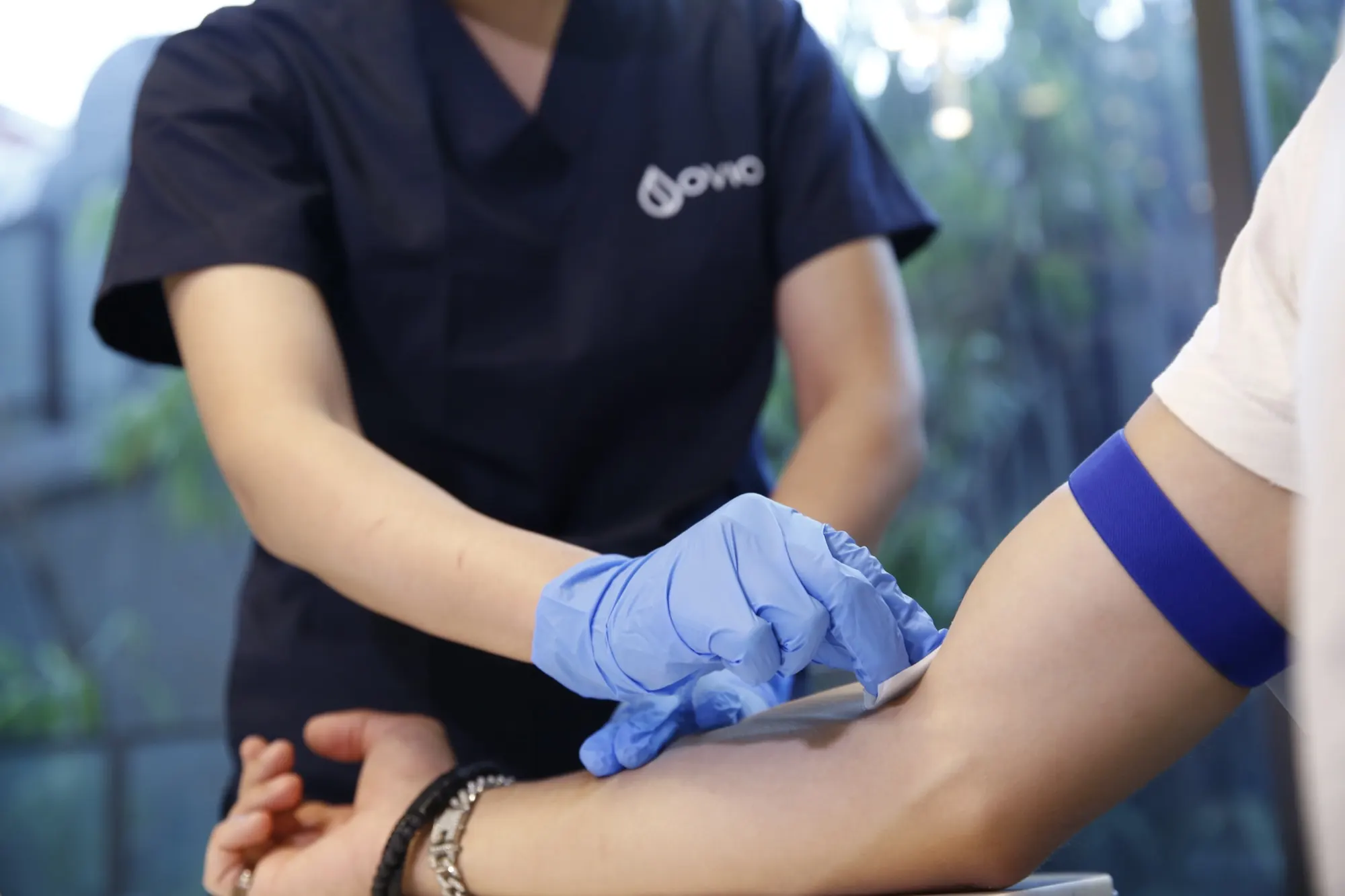
Both use a blood sample, usually taken from a vein in the bend of the elbow and sent to a laboratory. You need to fast for at least 8 hours before a fasting glucose test, but not usually before an HbA1c test.
Which is better, HbA1c or fasting glucose?
Neither is better for everyone. HbA1c is more convenient and shows the longer-term picture; fasting glucose is cheaper and more reliable when HbA1c can be misleading, such as with anaemia, kidney disease, pregnancy or thalassaemia. Many health checks include both.
Can I have diabetes with a normal fasting glucose?
Yes. Some people have normal fasting glucose but high blood sugar after meals, which HbA1c can pick up. That's another reason the two tests are sometimes used together.
Are diabetes blood tests expensive?
The cost depends on the test, where it's done and any package it's part of. In general, a fasting glucose test costs less than an HbA1c test.
Sources
ABOUT THIS GUIDE
This guide gives general information and is not personal medical advice.
- Written by
- Kewalee Rujikajorn
- Published